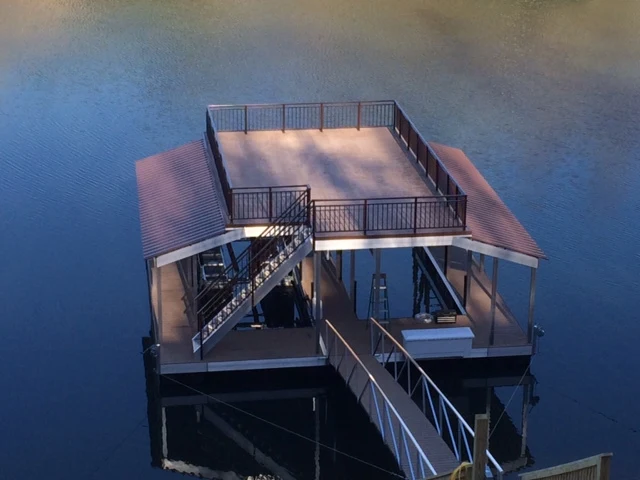
Lake Blue Ridge Boat Dock Builder and Dock Repair is a specialized field — and for good reason. This 3,290-acre reservoir, managed by the Tennessee Valley Authority (TVA), comes with unique challenges that most lakes don’t have.
Here’s a quick summary of what you need to know:
Lake Blue Ridge has roughly 60 miles of shoreline fed by the Toccoa River. It sits inside the Chattahoochee National Forest. That natural beauty comes with real responsibility for dock owners.
But there’s a lot of misinformation out there — about materials, permits, maintenance, and more. These myths can cost lakefront homeowners serious time and money.
This article breaks down the five most common myths so you can make smart, informed decisions about your waterfront investment.
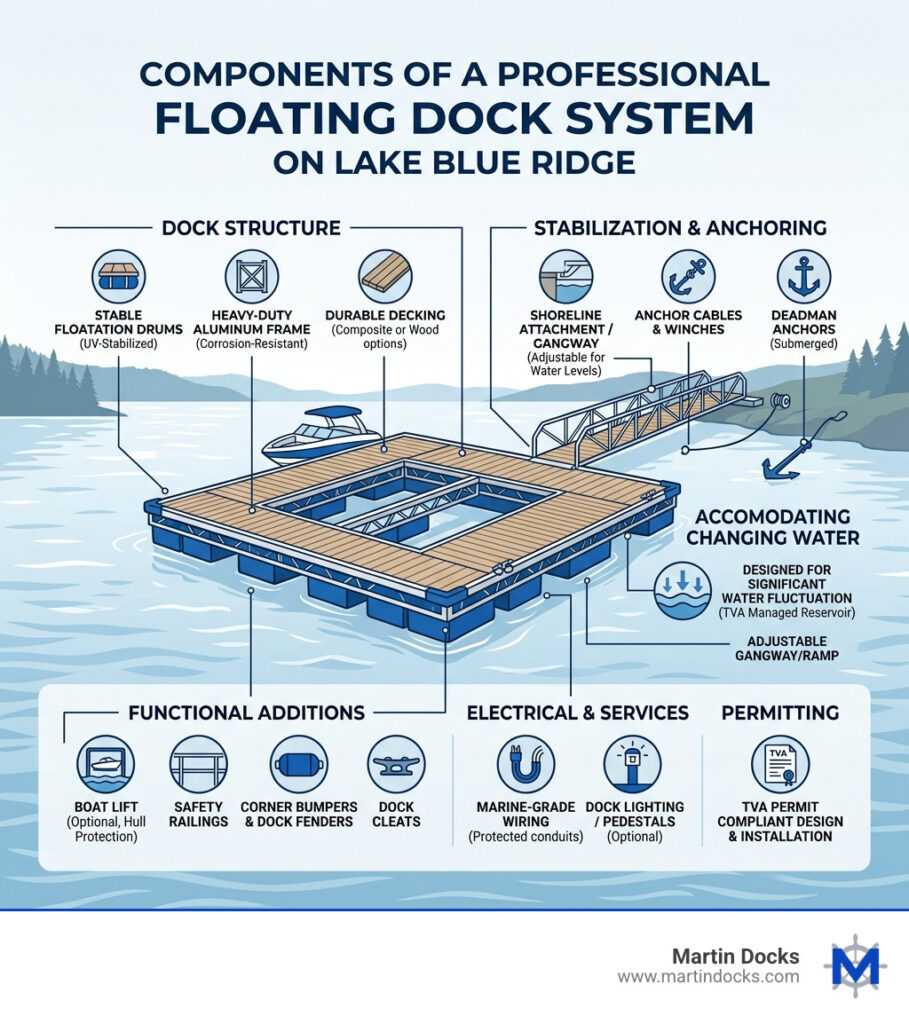
One of the most persistent myths we hear is that “a dock is just a dock,” and the materials used to build it are mostly about aesthetics. On a stable, small pond, that might be true. But on Lake Blue Ridge, your material choice is the difference between a legacy investment and a structural headache.
When considering Lake Blue Ridge Boat Dock Builder and Dock Repair, the debate usually lands on three contenders: aluminum, steel, and wood. While wood is traditional and steel is heavy, aluminum has emerged as the gold standard for North Georgia mountain lakes.
Lake Blue Ridge is known for its clear, deep waters, but it is also managed for power generation. This means the water moves, and the levels change. Aluminum offers a superior weight-to-strength ratio. It is light enough to be easily adjusted and moved as water levels fluctuate, yet strong enough to withstand the “24/7 stress” of being a floating structure.
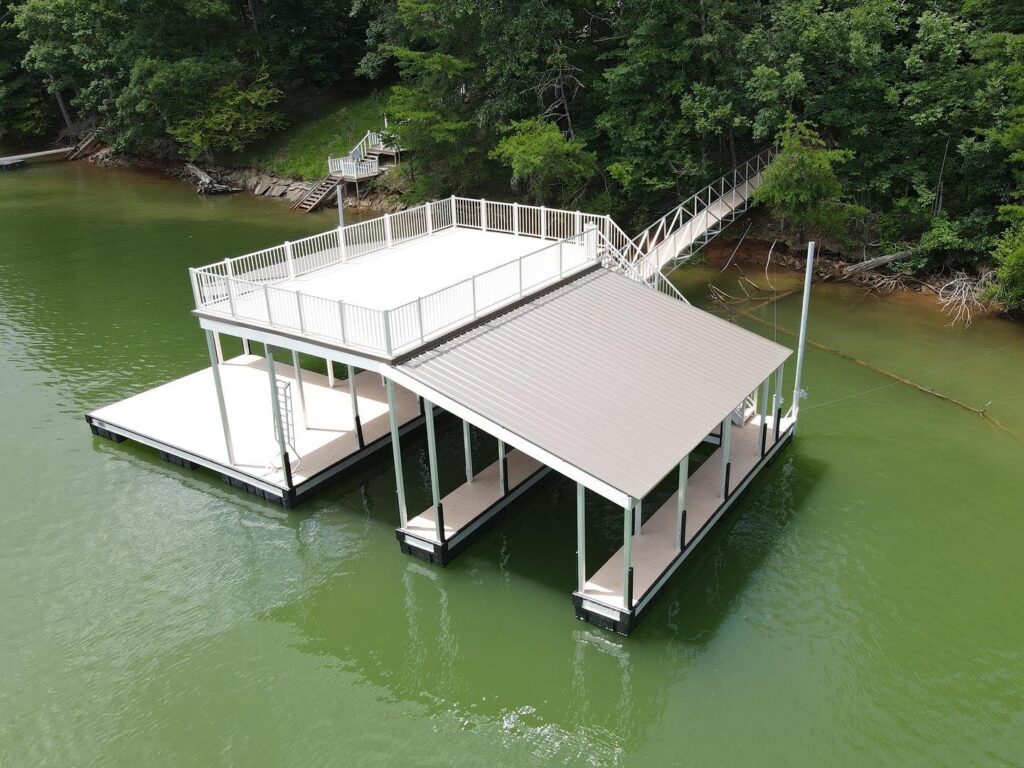
Unlike steel, which eventually rusts even when galvanized, or wood, which rots and warps over time, marine-grade aluminum is naturally corrosion-resistant. This is vital for the longevity of your dock. When we design custom docks, we use computer-aided technology to ensure every joint and frame is engineered for the specific conditions of the Toccoa River-fed reservoir.
When you are looking at the components of a high-quality dock, you have to look beneath the surface. It’s not just about the decking—though aluminum decking is a fan favorite because it stays cooler than wood and never splinters.
Feature | Aluminum | Steel | Wood |
Longevity | 30-50+ Years | 15-25 Years | 10-15 Years |
Maintenance | Very Low | Moderate (Rust Control) | High (Staining/Rot) |
Corrosion Resistance | Excellent | Poor to Fair | N/A (Subject to Rot) |
Weight | Light/Strong | Very Heavy | Moderate |
If you’ve ever tried to navigate federal bureaucracy, you know it’s rarely “simple.” Because Lake Blue Ridge is managed by the Tennessee Valley Authority, every square inch of the shoreline is protected. You cannot simply pull up a truck and start building a dock.
The TVA manages the shoreline to protect water quality, power production, and public recreation. Under Section 26a of the TVA Act, you must obtain a permit before starting any construction or modification. This includes:
Many homeowners believe they can just “swap out” an old dock for a new one without a permit. In reality, the TVA needs to approve the footprint, the materials, and the placement to ensure it meets their environmental and safety standards.
Navigating this process alone can lead to months of delays or even fines. As an experienced Lake Blue Ridge Boat Dock Builder and Dock Repair specialist, we often assist homeowners with this process.
The TVA Public Land Information Center (accessible at 1-800-882-5263) is the starting point, but you’ll need detailed plans, property surveys, and specific project details for approval. We help ensure your design fits within the TVA’s regulations from the start, saving you the headache of a rejected application. These permits are about more than just the dock; they are about protecting the natural beauty of the 60 miles of shoreline we all enjoy.
We call this the “Out of Sight, Out of Mind” myth. When the weather gets cold and the boat is winterized, many owners forget about their dock. However, Lake Blue Ridge doesn’t take a vacation, and neither should your maintenance schedule.
Because Lake Blue Ridge is a reservoir, the TVA intentionally draws down water levels during the winter months to prepare for spring rains and manage power needs. If your dock isn’t monitored, it could end up grounded on the shore, tilted at a dangerous angle, or with its anchoring cables snapped.
Dock moving is a critical service for Lake Blue Ridge residents. As the water recedes, the dock must be moved further out into the channel to stay afloat and level. Conversely, when the water rises in the spring, it needs to be moved back in to maintain safe access to the shoreline.
To keep your investment safe, we recommend a “Dock Watch” or monitoring service. This isn’t just about moving the dock; it’s a comprehensive health check for your waterfront property:
By staying proactive with Lake Blue Ridge Boat Dock Builder and Dock Repair, you avoid the “emergency repair” call in the spring when you’d rather be out on the water.
Many people look at the red clay banks of North Georgia and assume that erosion is just a fact of life. While wave action from boats and fluctuating water levels do put stress on the land, erosion is not “unavoidable”—it is manageable.
The clear waters of Lake Blue Ridge are often busy with wake boats and pontoons. The energy from those wakes hits the shoreline constantly. Without protection, this energy carves away the soil, eventually threatening the stability of your shoreline steps or even the trees on your property.
A well-placed dock can actually act as a minor buffer, but the real secret lies in how the dock integrates with the land. Professional Lake Blue Ridge Boat Dock Builder and Dock Repair includes a site assessment to determine the best placement for your dock to minimize disturbance.
We also specialize in shoreline stabilization, specifically rip rap. This involves placing large, angular stones along the shoreline. These stones absorb the energy of the waves rather than letting the water wash away the soil. It’s an aesthetically pleasing, permanent solution that protects your property value and keeps the lake water clear.
A crumbling shoreline is a liability. By integrating your dock structure with natural shoreline features and professional erosion control, you create a stable, safe environment for your family. This thoughtful planning ensures that your “gateway to the water” doesn’t slowly disappear into it.
We often hear homeowners say, “I’ll just tie the boat to the dock; I don’t need a lift.” While a boat lift certainly adds a touch of luxury, on Lake Blue Ridge, it is a practical necessity for anyone looking to protect their boat and their dock.
Leaving a boat in the water 24/7 leads to algae growth, hull staining, and potential osmosis in the fiberglass. On a lake with fluctuating levels and wind-driven waves, a boat tied to a dock is also at risk of “dock rash”—the constant bumping and grinding against the dock’s bumpers.
A quality boat lift, such as a FloatAir or HydroHoist system, allows you to launch or dry-dock your boat in under three minutes. This keeps the hull pristine and prevents the boat from putting unnecessary stress on the dock’s frame during a storm.
This is the most common question we get, and the answer is: it depends! Because every dock we build is a custom project, the price varies based on:
On some lakes, you’ll see “piers” or fixed docks on pilings. On Lake Blue Ridge, these are virtually non-existent because of the TVA water management. If you had a fixed dock, it would be underwater in the spring and 20 feet above the mud in the winter. Floating docks rise and fall with the water, ensuring you always have a level platform to step onto your boat.
A professional dock builder looks at the “big picture.” By using proper anchoring systems—like long-arm winches and cables—we can keep the dock secure without digging up the shoreline. Additionally, by installing code-compliant shoreline steps, we provide a safe path to the water that doesn’t encourage erosion through foot traffic on unstable soil.