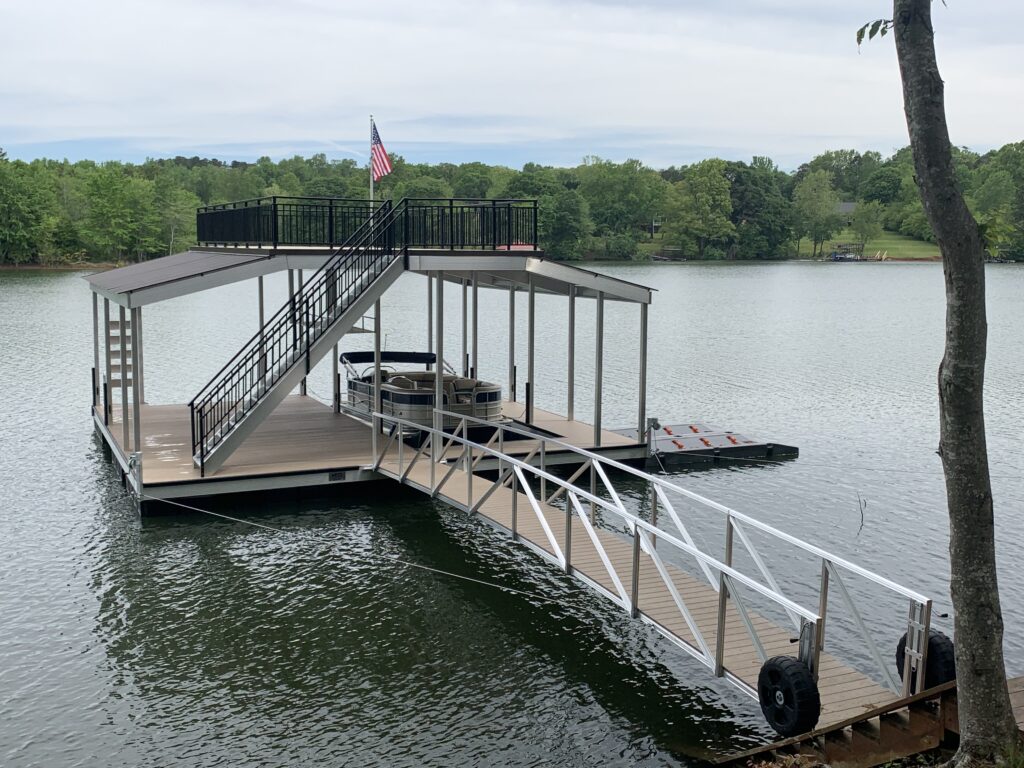
Owning waterfront property offers a unique lifestyle, blending daily relaxation with the thrill of on-the-water recreation. However, maximizing this experience requires the right infrastructure. For residential homeowners and commercial marina operators alike, investing in Professional Floating Boat Docks is a complete game-changer. Unlike traditional fixed structures that remain stubbornly rigid against changing tides, floating docks adapt seamlessly to their environment. By exploring modern materials, smart design, and proper installation techniques, you can transform your shoreline into a functional, beautiful, and enduring asset.
Floating boat docks have become the gold standard for waterfront access, and for excellent reason. One of the most significant advantages is their ability to rise and fall with the water. Fixed docks can become entirely submerged during heavy rains or stranded awkwardly high above the water line during dry summer spells. By utilizing highly engineered anchoring methods for fluctuating water levels, floating systems ensure your vessels are always easily and safely accessible, regardless of tidal changes, seasonal droughts, or heavy rainfall.
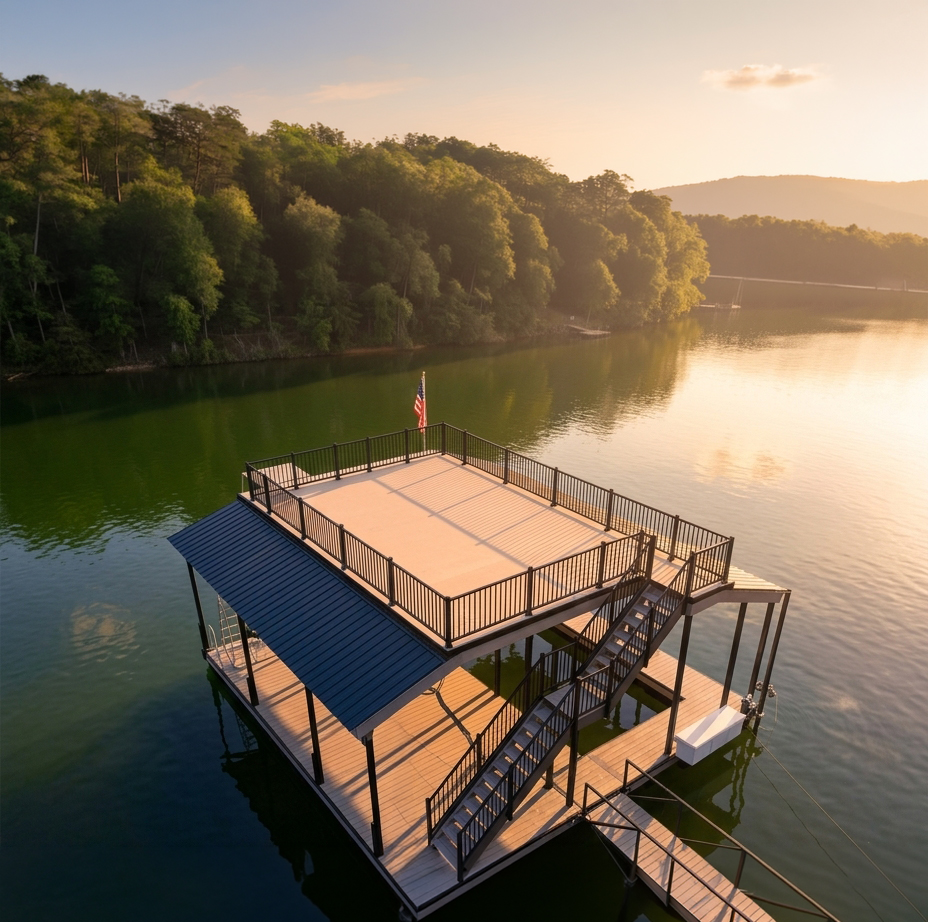
Furthermore, today’s professional floating boat docks are designed with superior wave attenuation and dock stability in mind. Modern pontoon designs and heavy-duty frames actively absorb, deflect, and break up wave energy. This ensures a smooth, secure walking surface even when the wake from passing boats gets rough, making the dock highly reliable for loading passengers, boarding energetic pets, or simply placing a chair down to relax by the water.
When planning your waterfront upgrade, selecting the right materials is paramount to creating low-maintenance waterfront infrastructure. You want to spend your weekends enjoying the water, not replacing rotted wood or grinding away rust.
Gone are the days of utilizing rusting steel barrels or crumbling, exposed foam blocks that harm aquatic life. Today’s industry leaders rely heavily on high-density polyethylene pontoon materials. This heavy-duty, UV-resistant plastic will not rot, rust, or corrode, making it incredibly durable against both impacts and the sun’s rays. Furthermore, because these pontoons are completely sealed and durable, they offer supreme buoyancy without leaching harmful chemicals or microplastics into the fragile aquatic ecosystem.
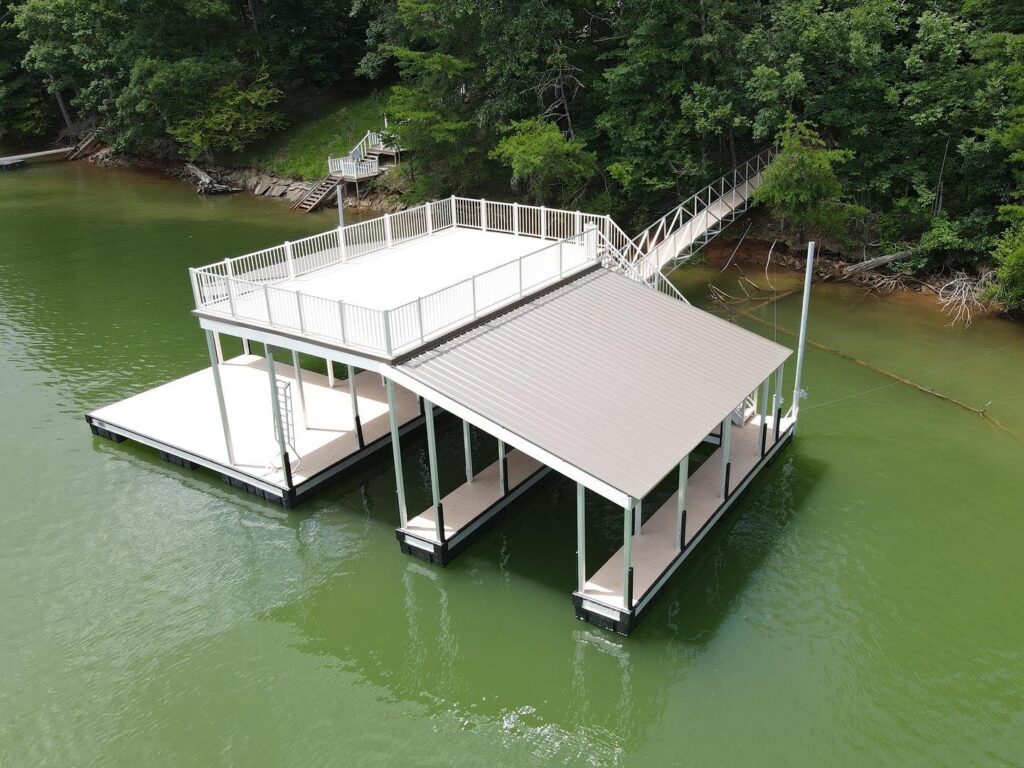
The walking surface is another critical choice. When comparing aluminum vs wood marine decking, aluminum almost always comes out on top for long-term longevity. Wood offers a classic, rustic aesthetic but requires continuous upkeep—including regular sealing, staining, and eventual replacement due to rot, warping, and splinters. Aluminum, on the other hand, is incredibly lightweight, stays surprisingly cool to the touch (especially with modern, light-colored powder coatings), and remains fully impervious to marine borers.
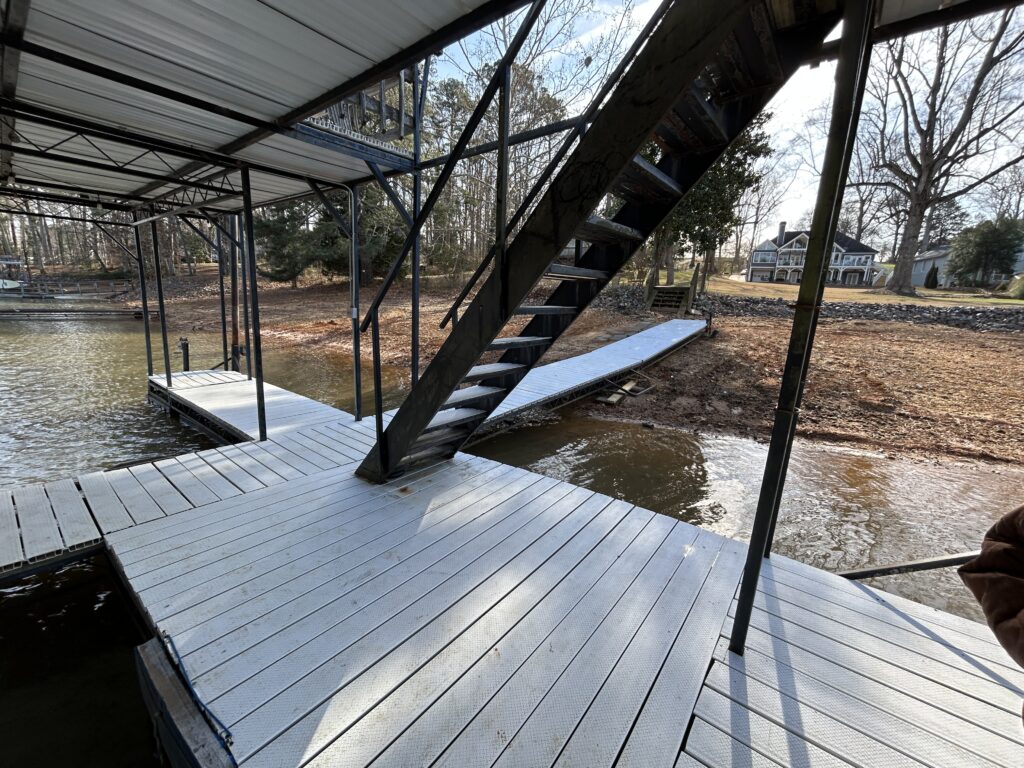
For many waterfront owners, that performance translates directly into a preference for aluminum boat docks (or, at minimum, aluminum-framed floating boat docks) because the material delivers excellent strength-to-weight, consistent long-term stability, and dependable corrosion resistance in permanently wet environments. Ultimately, structural aluminum ranks among the best materials for saltwater environments due to its natural, high resistance to harsh corrosion.
Every waterfront is unique, and your dock should reflect your specific lifestyle needs. The introduction of modular plastic dock systems has revolutionized shoreline layouts. Instead of building one massive, unchangeable structure, modular blocks and connective framing can be assembled, expanded, or reconfigured precisely as your needs evolve.
This flexibility allows for virtually endless layouts. If you decide to add a pair of personal watercraft to your fleet next season, you can easily integrate customizable configurations for jet ski ports without having to tear down or dramatically alter your existing setup. Moreover, a well-engineered modular layout significantly improves the load capacity for multi-vessel docking, safely distributing the weight of heavy pontoon boats, speedboats, and water toys evenly across the floating platform.
A high-quality dock is only as strong as what holds it in place. Understanding the difference between piling and pipe anchoring is essential for establishing a secure, long-lasting setup.
Spud Poles: These are heavy-duty poles driven deep into the lake, river, or ocean bed. The dock attaches to the spud poles using heavy-duty roller brackets, allowing the floating platform to glide up and down smoothly. Spud poles are ideal for deep water, heavy currents, and high traffic areas.
Cable anchoring: Generally used in shallower and calmer waters. This is a cost-effective and highly secure method for small to medium residential docks.
Regardless of the anchoring system you choose, all structural joints must utilize heavy-duty marine-grade hardware and connectors.
While small DIY kits certainly exist, a highly successful, lasting project almost always requires specialized expertise. Figuring out exactly how to install a floating pier involves understanding fluctuating water depths, underwater soil conditions, and prevailing local wind patterns. Professional boat dock installation ensures that every bracket is torqued correctly and that the dock aligns perfectly with the shoreline to prevent stress fractures.
Before laying a single pontoon in the water, you must also navigate the necessary legalities. Navigable waters are heavily regulated by local and federal entities to protect ecosystems and ensure public navigational safety. Always thoroughly research the permit requirements for private boat slips in your specific municipality. Local environmental agencies often dictate exactly how far your dock can extend into the waterway and what specific materials you are legally permitted to use.
These requirements can also vary widely from lake to lake. If you are researching boat docks for Lake Lanier, boat docks for Lake Allatoona, boat docks for Lake Chatuge, boat docks for Lake Blue Ridge, boat docks for Lake Nottely, or boat docks for Lake Fontana, confirm the specific shoreline rules, dock size limits, and anchoring standards that apply in that reservoir and county.
Additionally, modern permitting regulations heavily consider the environmental impact of underwater dock supports. Because floating docks require significantly fewer permanent posts driven into the seabed compared to massive fixed docks, they are generally much gentler on sensitive underwater habitats like seagrass beds, fish spawning areas, and coral reefs.
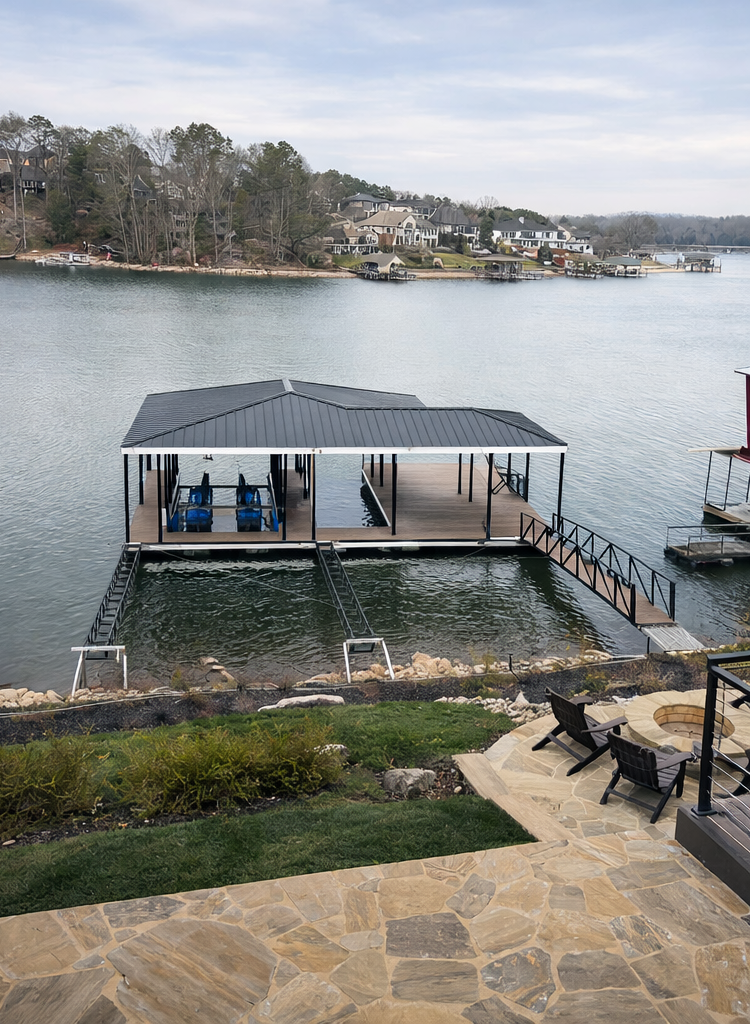
Upgrading your shoreline is about much more than just finding a convenient place to tie up a boat; it is about creating a safe, highly functional, and long-lasting extension of your property. By opting for professional floating boat docks, you are investing in unmatched versatility, paramount safety, and aesthetic beauty. From selecting high-tech materials and securing the appropriate municipal permits to choosing the ideal anchoring system, every single step matters. Consult with a waterfront professional today to design a customized, floating dock system that will effortlessly serve your family—or your marina guests—for decades to come.