Why Aluminum Floating Docks Are the Smart Choice for Your Waterfront
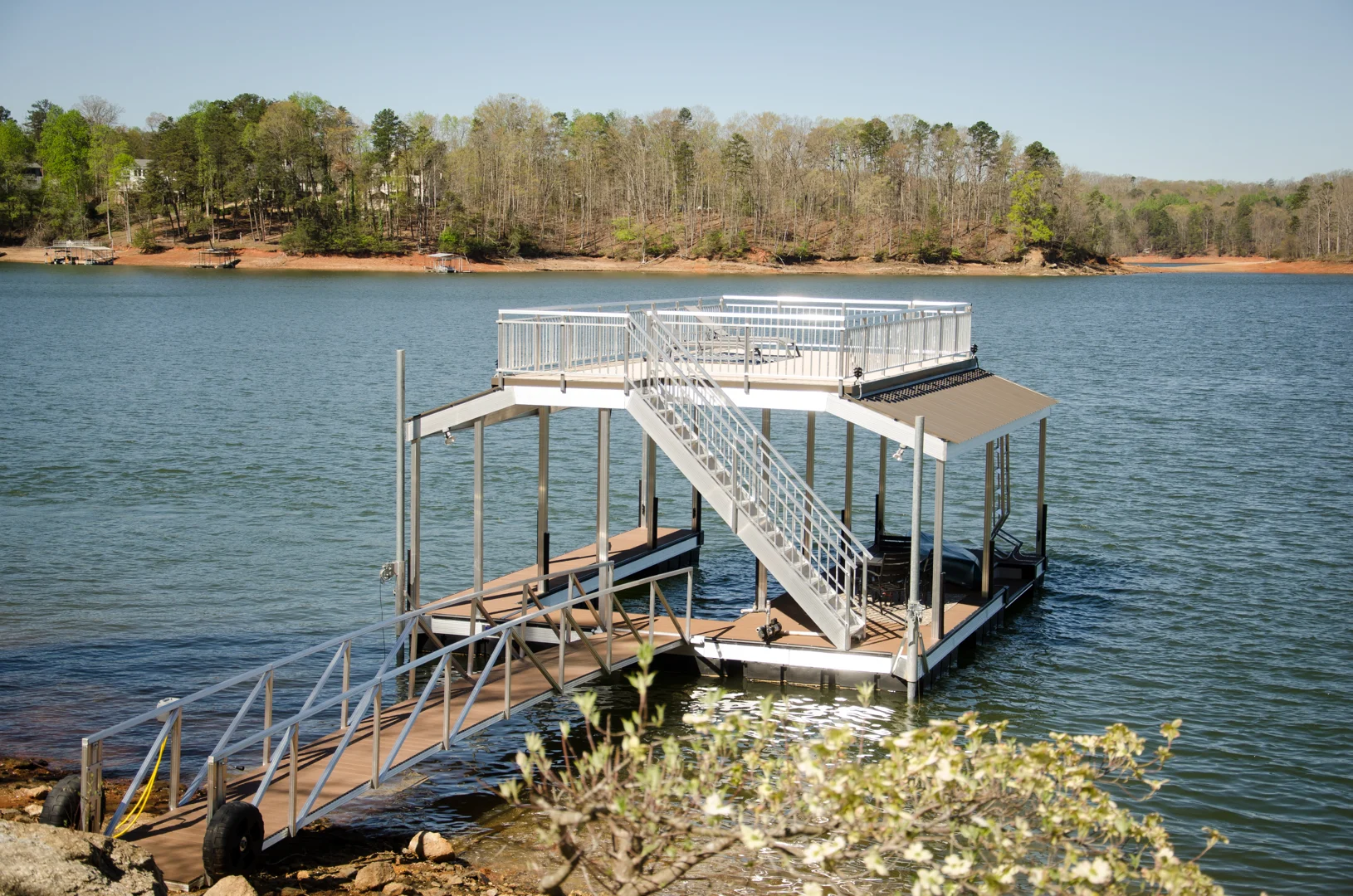
Aluminum floating docks are the most popular upgrade for lakefront and waterfront property owners who want a durable, low-maintenance dock that adjusts with changing water levels — without the rot, splinters, or constant upkeep of wood.
Quick answer: What makes aluminum floating docks worth it?
- Durability — Marine-grade aluminum resists rust, corrosion, and UV damage for decades
- Low maintenance — No painting, staining, or replacing rotted boards
- Adjustable — Floats rise and fall with water levels (some models handle up to 4 feet of fluctuation)
- Lightweight — Easy for two people to install or remove seasonally
- Versatile — Available in straight, L-shape, T-shape, and custom layouts
- Safe — No hidden dry rot, no splinters, slip-resistant surfaces
If you own waterfront property, you already know the frustration. Wood docks warp, crack, and rot — often from the underside, where you can’t see the damage until it’s a safety hazard. Steel docks are heavy and prone to rust. Plastic options lack the strength and aesthetics most homeowners want.
Aluminum changes that equation entirely.
Modern aluminum floating docks combine a strong welded frame with foam-filled floats to create a stable, buoyant platform that moves with the water rather than fighting it. The result is a dock that lasts for generations with minimal effort on your part.
This guide covers the top aluminum floating dock systems available today — their specs, configurations, pricing, and what to look for when commissioning a custom installation.
The Engineering Behind Aluminum Floating Docks
When we talk about aluminum floating docks, we aren’t talking about flimsy metal frames. We are talking about high-performance marine engineering. In our decades of experience serving Lake Lanier and the surrounding North Georgia waterways, we’ve seen how the right structural design makes the difference between a dock that lasts five years and one that lasts fifty.
The backbone of a premium dock is the alloy. Most professional-grade systems utilize 6061-T6 aluminum, an aerospace-grade material known for its incredible strength-to-weight ratio and natural resistance to the elements. Unlike wood, which loses structural integrity as it absorbs water, or steel, which begins the oxidation process the moment it touches the lake, aluminum creates a protective oxide layer that prevents deep corrosion.
Structural Standards and Capacity
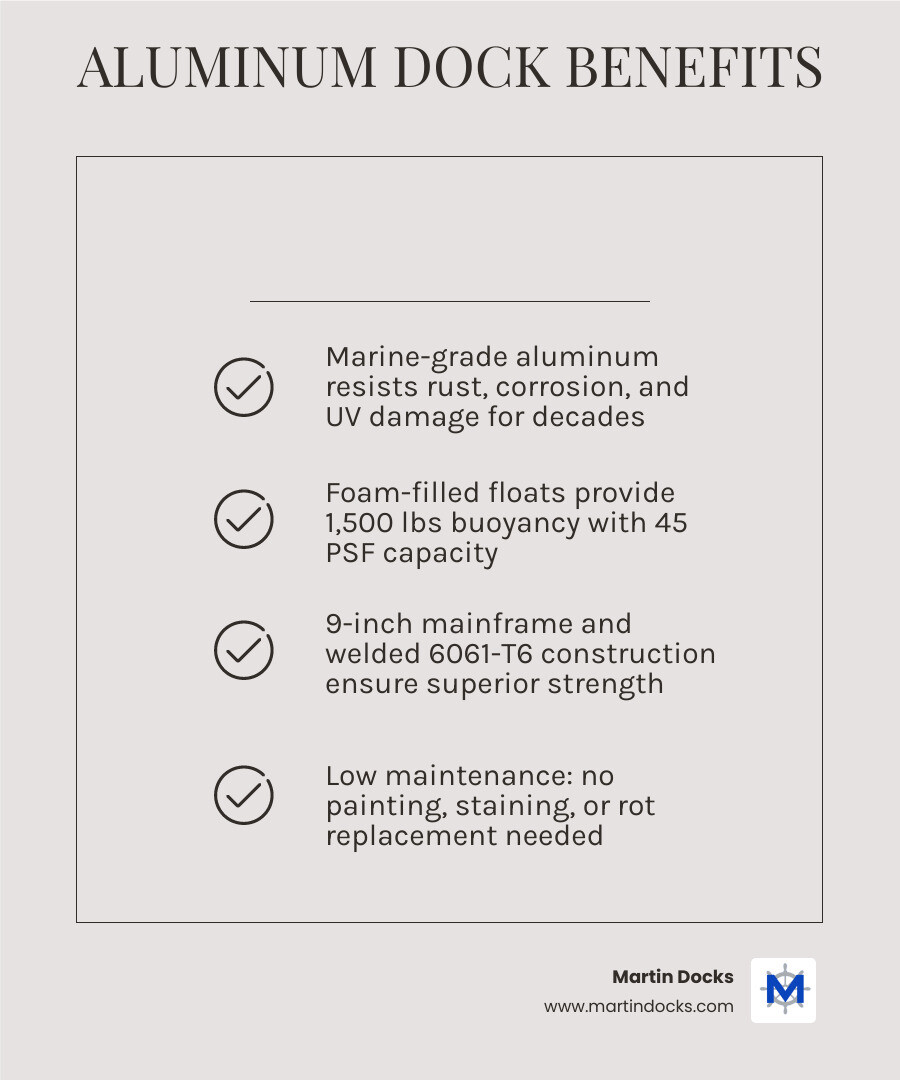
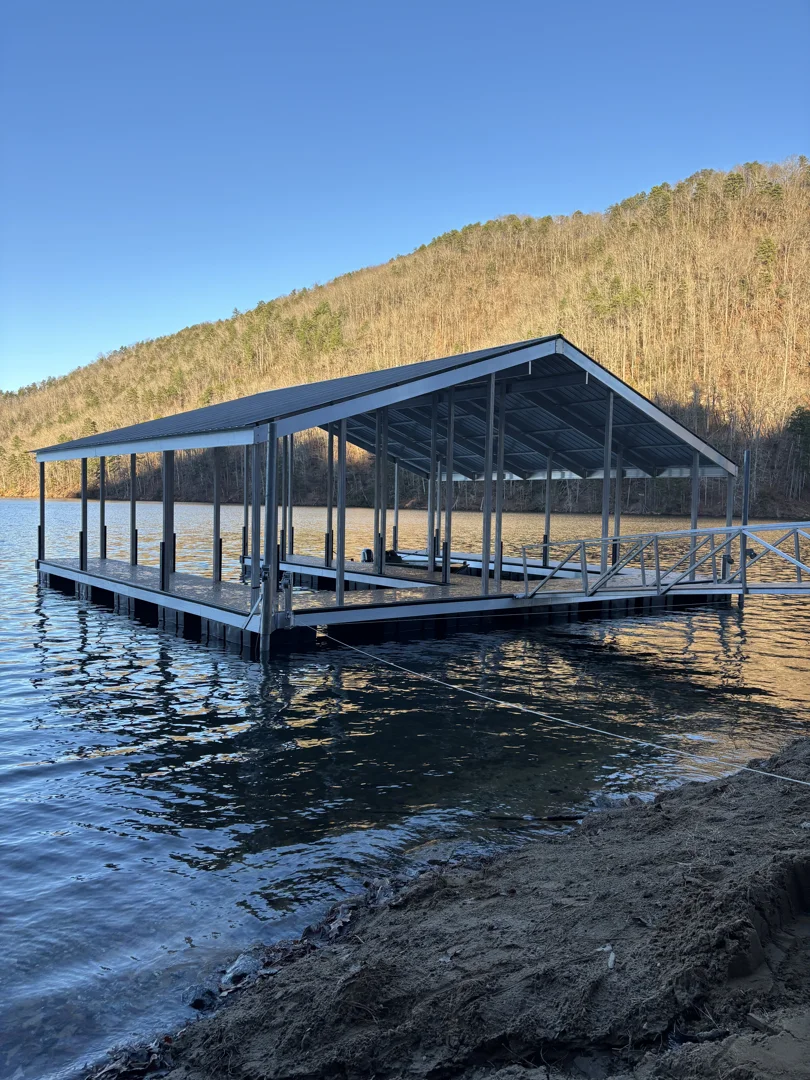
Engineering a dock involves more than just making it float; it must withstand the dynamic forces of wind, waves, and human activity. High-end aluminum frames are often designed with a 9-inch mainframe and 6-inch channels for maximum rigidity. This allows the system to support significant loads—often rated for a weight capacity of 45 PSF (pounds per square foot). To put that into perspective, a well-built 8-foot section can often hold up to 1,500 lbs of buoyancy without breaking a sweat.
We believe that Professional Floating Boat Docks Enhance Your Waterfront not just by looking better, but by performing better. Modern designs often include patented features like interlocking systems and corner receivers that move stress away from weak points. By avoiding mitered corner welds—which are prone to failure under heavy wave stress—and using full-pole insertion designs, these docks achieve a level of stability that was once only possible with heavy concrete or steel structures.
For those interested in the technical details of why this metal is so effective, you can explore Scientific research on aluminum corrosion resistance in marine environments to see how marine-grade alloys perform over time.
Material Selection for Aluminum Floating Docks
A dock is only as good as the sum of its parts. To ensure a lifetime of service on lakes like Blue Ridge or Nottely, every component must be chosen for its environmental resilience.
- Encapsulated Polyethylene Floats: The “floating” part of the dock relies on heavy-duty tubs. We use floats filled with expanded polystyrene (EPS) foam and encapsulated in a tough polyethylene shell. This ensures that even if the outer shell is punctured by a stray log or boat prop, the dock remains buoyant.
- Stainless Steel Fasteners: Mixing metals can lead to galvanic corrosion. That’s why professional installers use 100% stainless steel fasteners to secure decking and accessories.
- 13-Inch Freeboard: This is the distance from the water’s surface to the top of the dock. A standard 13-inch profile is ideal for most recreational boats, providing easy access without being so high that it’s difficult to board a kayak or paddleboard.
- UV Inhibitors: Everything on the water is under constant assault from the sun. Both the floats and the decking materials are treated with UV inhibitors to prevent brittleness and fading over the decades.
- Heavy-Duty Hinges: For systems that require articulation—such as where a gangway meets the floating platform—specialized hinges are used. These allow the dock to rise and fall up to 4 feet (or more) as water levels fluctuate, preventing the structural “binding” that destroys rigid docks.
Customizing Your Waterfront Layout
One of the greatest advantages of aluminum floating docks is their modularity. Whether you have a narrow cove on Lake Allatoona or a wide-open view on Lake Chatuge, we can configure a layout that fits your lifestyle.
Popular Configurations
- Straight Layout: The simplest and most cost-effective option, perfect for use as a swimming platform or a minimalist launch for kayaks.
- L-Shape and T-Shape: These configurations provide a “protected” area for your boat while creating a larger deck space for chairs, coolers, and sunbathing.
- Double Patio: For those who love to entertain, the double patio offers a massive surface area. It provides enhanced stability and plenty of room for a dining table or outdoor kitchen.
- Custom Slips: We can design slips specifically for your watercraft, including a Double Floating Jet Ski Dock For Sale to keep your PWCs high, dry, and easy to launch.
Customizing Your Aluminum Floating Docks
While the frame is aluminum, the “skin” of your dock can be tailored to your aesthetic preferences.
- Cedar Decking: For those who love the classic look and smell of natural wood. We use kiln-dried Western Red Cedar, which is naturally resistant to decay.
- Composite Decking (TimberTech): A favorite for many homeowners in Gainesville and Hiawassee. It offers a “wood-look” with zero maintenance and a high modulus of elasticity, meaning it won’t sag over time.
- Aluminum Decking (LockDry): This is the ultimate “forever” option. Some aluminum decking is even watertight, allowing you to create a dry storage area beneath an upper-level sundeck.
- Powder-Coated Finishes: Want your dock to blend in? We offer designer color series in nature-inspired tones like sand, bronze, and slate.
- Gangway Lengths: The gangway (or walkway) is your bridge to the shore. If your water levels fluctuate significantly, a longer gangway (20-40 feet) ensures the slope remains manageable even when the lake is low.
Performance in Harsh Environments and Fluctuating Water Levels
Lakes in North Georgia and Western North Carolina are notorious for water level fluctuations. Whether it’s the seasonal drawdowns on Lake Lanier or the tidal-like changes in dam-controlled reservoirs, a stationary dock simply can’t keep up.
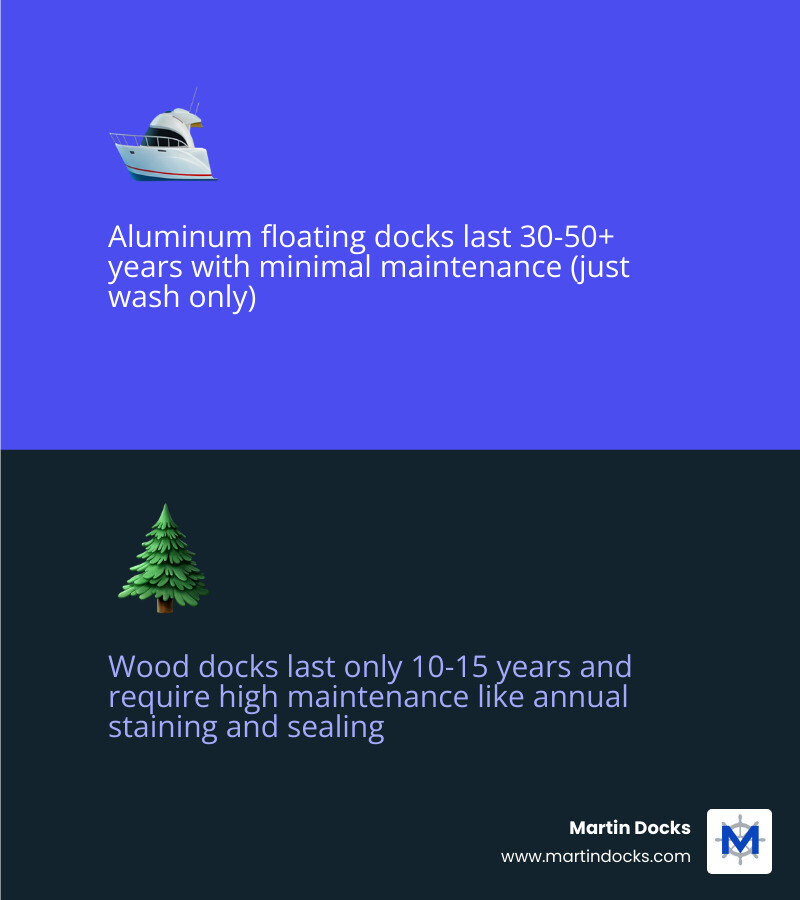
Aluminum vs. The Alternatives
| Feature | Aluminum Floating Docks | Wood Docks | Plastic Docks |
|---|---|---|---|
| Lifespan | 30-50+ Years | 10-15 Years | 15-20 Years |
| Maintenance | Minimal (Wash only) | High (Stain/Seal) | Moderate (Cleaning) |
| Stability | High (Welded frames) | Moderate | Low (Can feel “bouncy”) |
| Water Levels | Adjusts automatically | Fixed (Requires legs) | Adjusts automatically |
| Resale Value | Increases property value | Depreciates quickly | Neutral |
Our Gainesville Floating Dock Experts often point out that while the initial investment for aluminum is higher than wood, the total cost of ownership is significantly lower. You won’t be spending your weekends power washing and staining, and you certainly won’t be worried about the environmental impact of chemicals leaching into the water. For more on this, the Research on the environmental impact of treated wood vs aluminum highlights how aluminum is a much cleaner choice for our local ecosystems.
In areas where the water freezes, aluminum’s strength is a lifesaver. While we recommend “Ice Eaters” for extreme conditions to keep water moving around the floats, the aluminum frame can handle the expansion and contraction of ice much better than brittle plastic or rotting wood.
Installation, Anchoring, and Maintenance Requirements
Installing aluminum floating docks is a precision job. Because these docks are lightweight compared to steel, they can often be pre-assembled at our facility in Gainesville and towed or trucked to your site.
Anchoring Systems
How do you keep your dock from floating away during a storm?
- Piling Hoops & Rollers: These wrap around vertical pilings, allowing the dock to slide up and down with the water level. We use urethane bushings to eliminate the “clanking” noise of metal-on-metal.
- Sand Augers: In areas with soft bottoms (sand or mud), augers are screwed deep into the lakebed to provide a secure anchor point for cables.
- Stiff Arms & Winch Systems: These are used to tether the dock to the shoreline, allowing you to “crank” the dock in or out as the water recedes or rises.
Maintenance and Repair
Even the best docks need a little love. While aluminum doesn’t rot, you should still check your hardware and floats annually. If you ever experience storm damage or need an upgrade, our team specializes in Dock Repair on Lake Lanier, ensuring your investment stays in top shape for the next generation.
Frequently Asked Questions about Aluminum Floating Docks
How long do aluminum floating docks last?
With proper material selection—specifically marine-grade 6061-T6 aluminum—you can expect a lifespan of 30 to 50 years. Because the structural integrity does not degrade like wood, many of the first aluminum docks installed in the early 2000s are still in perfect condition today.
Are aluminum docks suitable for saltwater?
Yes, provided they are built with marine-grade alloys and stainless steel hardware. In coastal or brackish environments, we take extra precautions to prevent electrolysis, ensuring the dock remains beautiful and stable despite the salt spray.
How do these docks handle freezing conditions?
Aluminum is excellent in cold weather. Unlike plastic, it won’t become brittle in sub-zero temperatures. The encapsulated floats are designed to withstand the pressure of surface ice. However, in areas with significant “ice shove” or moving ice floes, we may recommend seasonal removal—which is made much easier by the lightweight nature of the aluminum sections.
Conclusion
Upgrading to aluminum floating docks is more than just a home improvement project; it’s an investment in your lifestyle. It means more time spent enjoying the water with your family and less time worrying about splinters, rot, or whether your dock is currently underwater.
At Martin Docks, we’ve been building the backbone of the North Georgia and Western North Carolina waterfronts since 1956. From our home base in Gainesville to the shores of Lake Blue Ridge and beyond, we bring generations of experience to every custom project. Whether you need a simple swimming platform or a multi-slip marina-grade system, we are here to help you build your escape.
Ready to transform your shoreline? Explore our custom aluminum docks and let’s start designing your home on the water.