A boat dock is only as good as the team that builds it. The frame, flotation, anchoring, and decking all have to work together under conditions that change with every season—and that kind of system requires experience to get right.
This guide covers what professional dock builders actually provide, the types of docks suited for Southeastern lakes, and how the construction process works from initial consultation through installation and long-term service.
Boat dock builders handle the full scope of waterfront construction, from initial design through final installation and long-term service. A professional builder assesses your shoreline, engineers a system that fits your property, secures the required permits, fabricates the components, and installs everything on the water. You work with one team instead of juggling multiple contractors.
What does that actually look like in practice? Here’s what a turnkey dock project typically includes:
Beyond the construction itself, an experienced builder brings knowledge about your specific lake. Water level patterns, permit quirks, and which materials hold up best in your area are all part of that expertise.
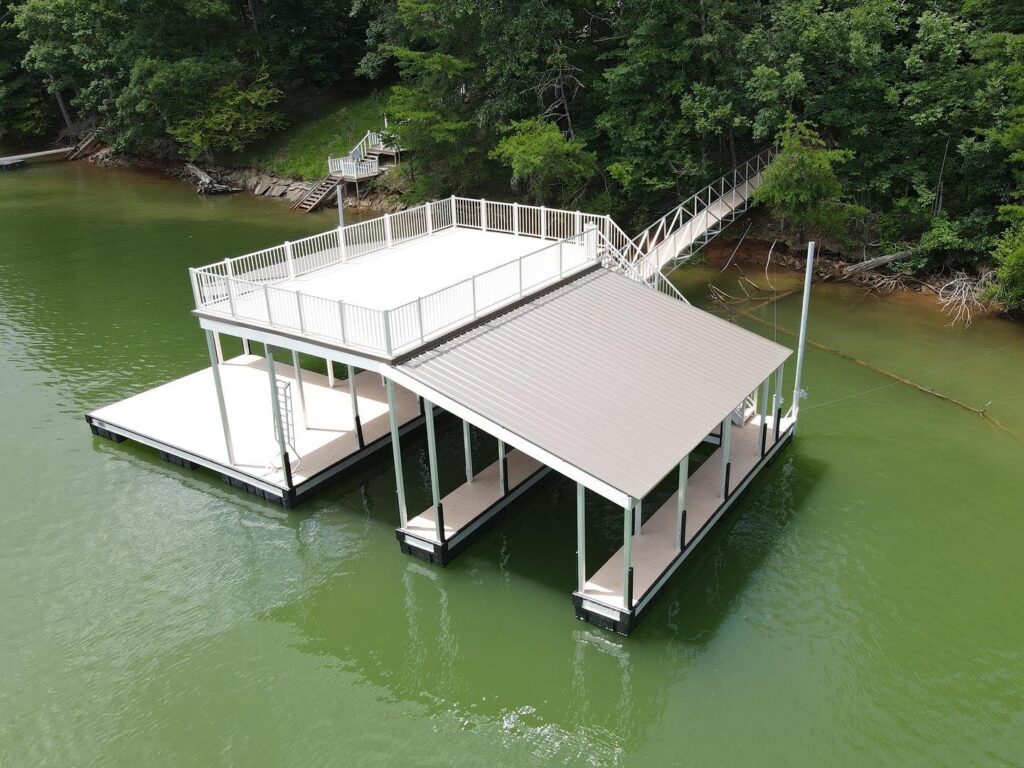
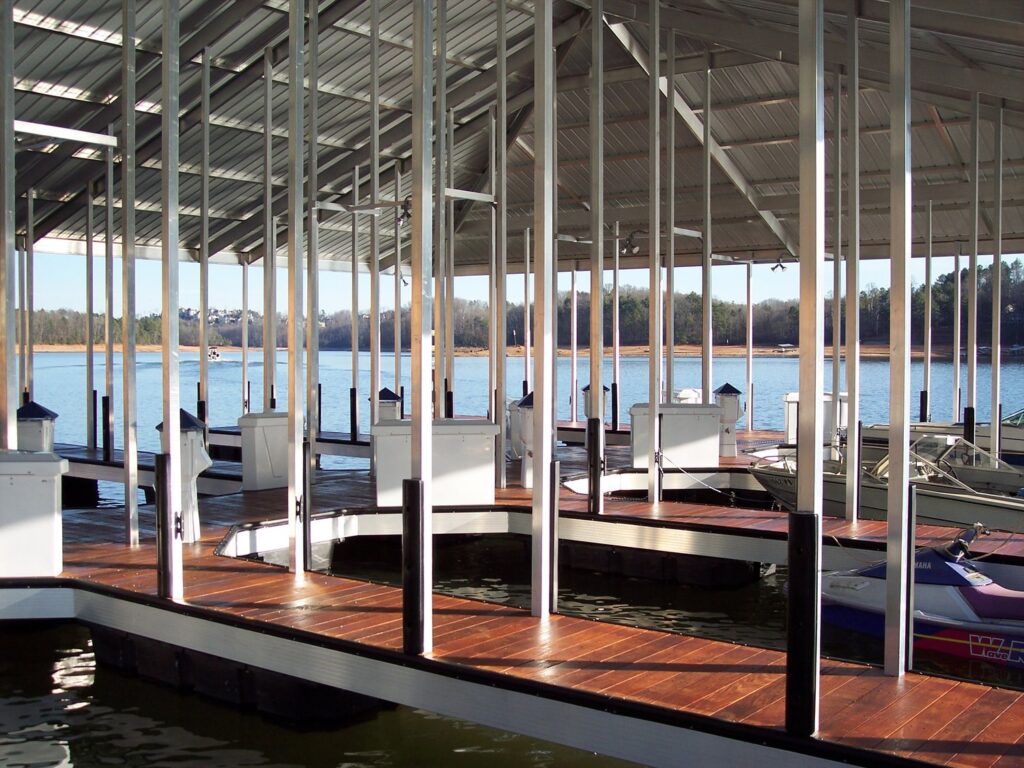
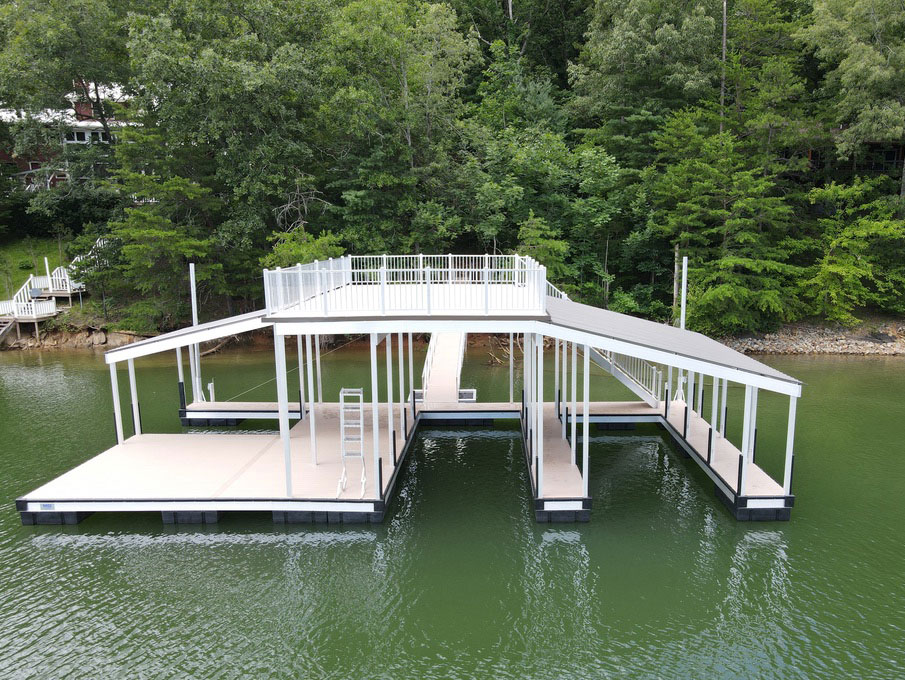
Floating docks sit on enclosed flotation pods rather than being anchored at a fixed height. The platform rises and falls with water levels, which makes floating systems particularly practical for lakes where levels change seasonally.
Aluminum frames offer clear advantages over wood or steel. Aluminum resists corrosion, requires minimal upkeep, and avoids the rot, rust, and pest damage that shortens the lifespan of other materials. A well-built aluminum floating dock can last 30 years or longer with basic care.
Fixed docks are stationary structures anchored directly to the lakebed or shoreline using pilings or posts. When water levels stay relatively stable throughout the year and the lakebed can support permanent foundations, fixed docks work well.
The choice between floating and fixed comes down to your lake’s characteristics. Lakes managed by the TVA or Army Corps often see significant seasonal drawdowns, and in those cases, floating systems tend to be the more practical option.
Pre-owned docks offer an affordable way to get quality waterfront access without starting from scratch. A professional team can inspect, refurbish, and relocate a previously owned system to your property.
For buyers who want reliable dock access at a lower price point, pre-owned options paired with professional installation and ongoing service deliver real value.
Every lake has different permit requirements, water level patterns, and shoreline conditions. A builder familiar with your specific lake understands what works before construction begins.
Martin Docks has installed thousands of aluminum dock systems across major Southeastern lakes:
Local knowledge extends beyond construction. Understanding how a lake behaves through drought years, high-water seasons, and storm events informs better design decisions from the start.
Southeastern lakes present specific challenges. Humid summers accelerate corrosion. Water levels fluctuate with rainfall and dam management. Storms test structural integrity. Aluminum floating docks address all of these conditions better than traditional wood or steel alternatives.
| Feature | Aluminum Floating Docks | Wood or Steel Docks |
|---|---|---|
| Maintenance | Minimal; occasional cleaning | High; regular staining, sealing, board replacement |
| Durability | Resistant to rust, corrosion, and pests | Vulnerable to rot, rust, and insect damage |
| Water level adaptability | Rises and falls with the water | Fixed height; can become unusable in high or low water |
| Typical lifespan | 30+ years | 10–20 years depending on maintenance |
The flotation system keeps the dock platform at a consistent height above the water regardless of lake level changes. During significant drawdowns or high-water events, your dock remains usable while fixed docks may sit too high or too low.
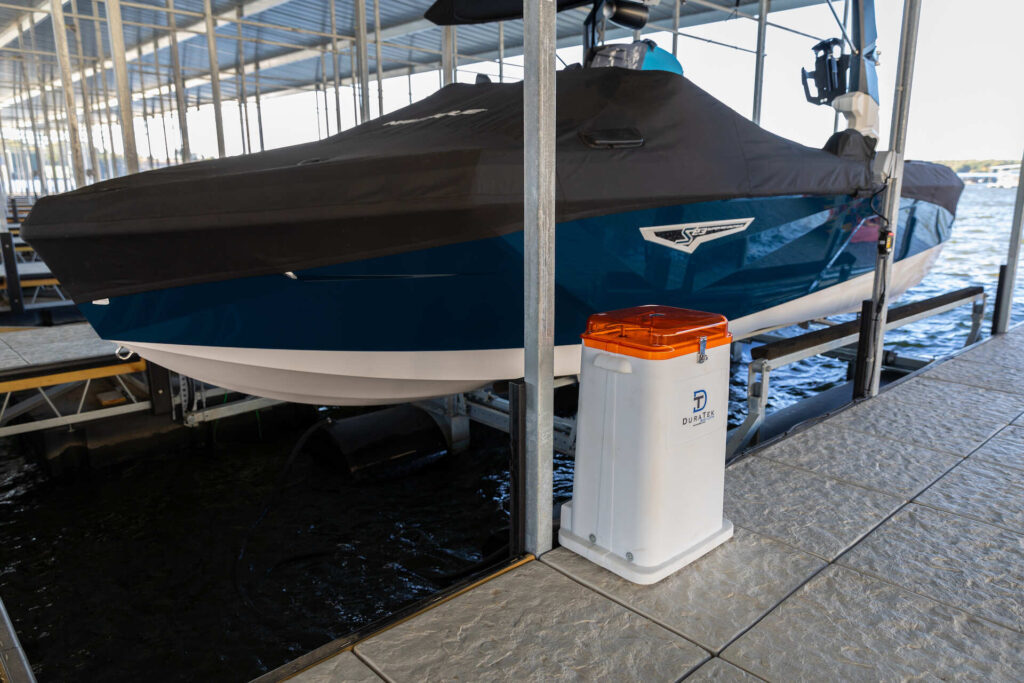
A boat lift elevates your vessel out of the water when not in use. Keeping the hull dry prevents algae growth, water damage, and the wear that comes from constant contact with the lake.
Lifts integrate directly into custom dock floor plans and are sized to match your specific boat. As an authorized Floatair dealer, Martin Docks supplies and installs lift hardware designed to work seamlessly with floating dock systems.
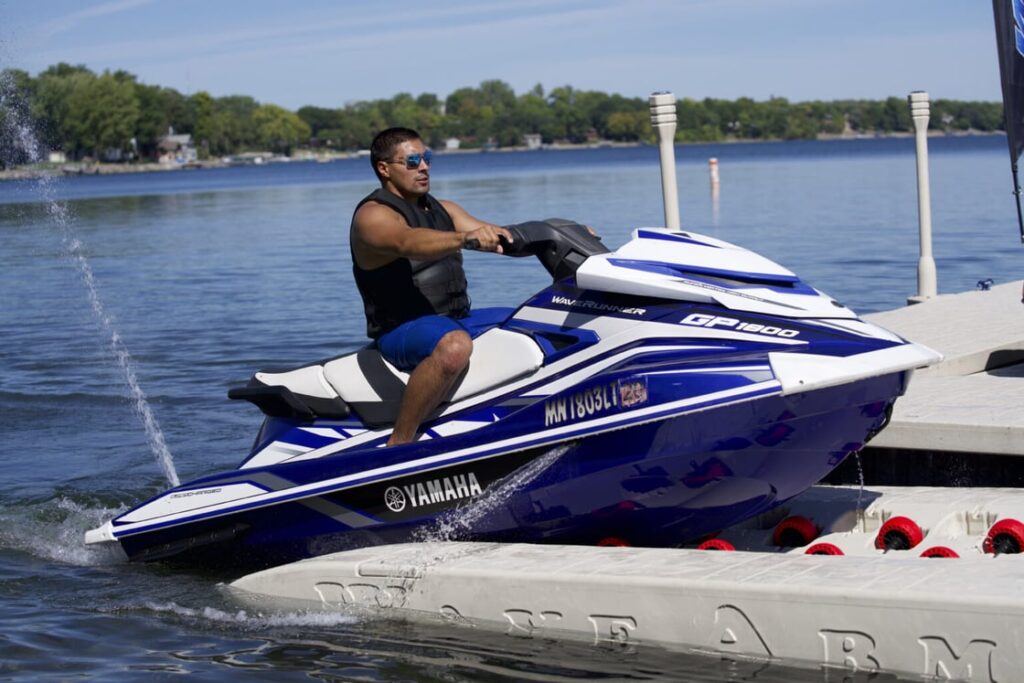
PWC ports are drive-on platforms for jet skis and personal watercraft. Rather than leaving your PWC in the water or manually lifting it onto the dock, you simply drive on and secure the craft.
The ports attach to your dock system and can be incorporated into the original design or added later as your needs change.
Ready to design your waterfront system? Request a consultation to discuss dock, lift, and PWC port options for your property.
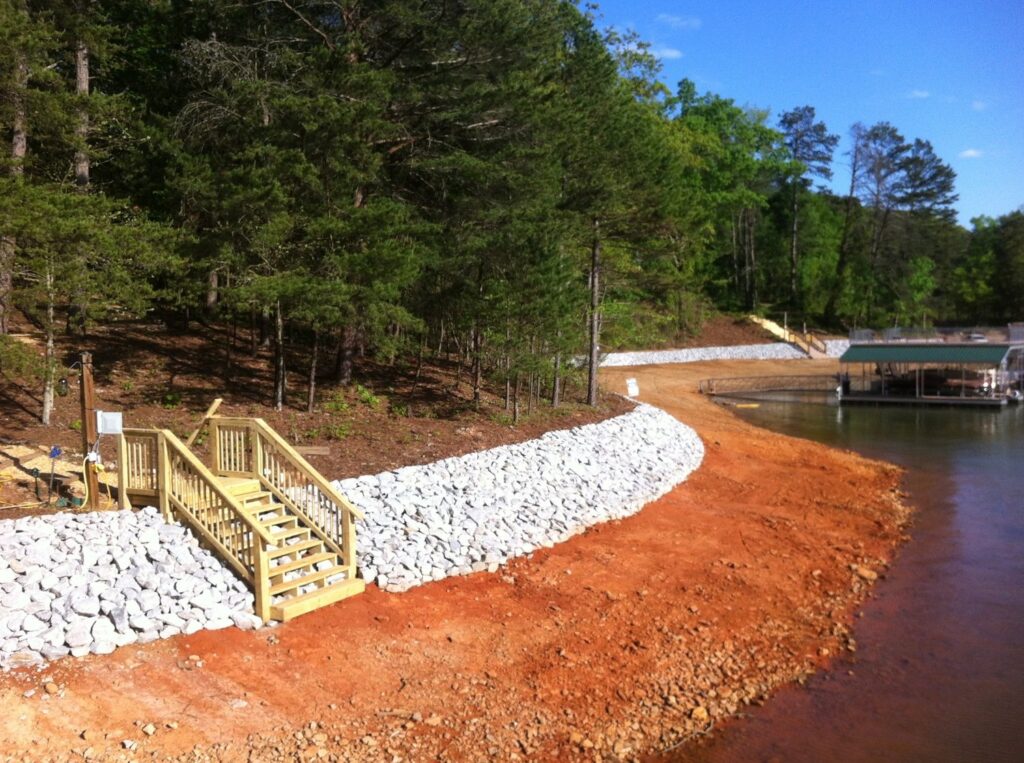
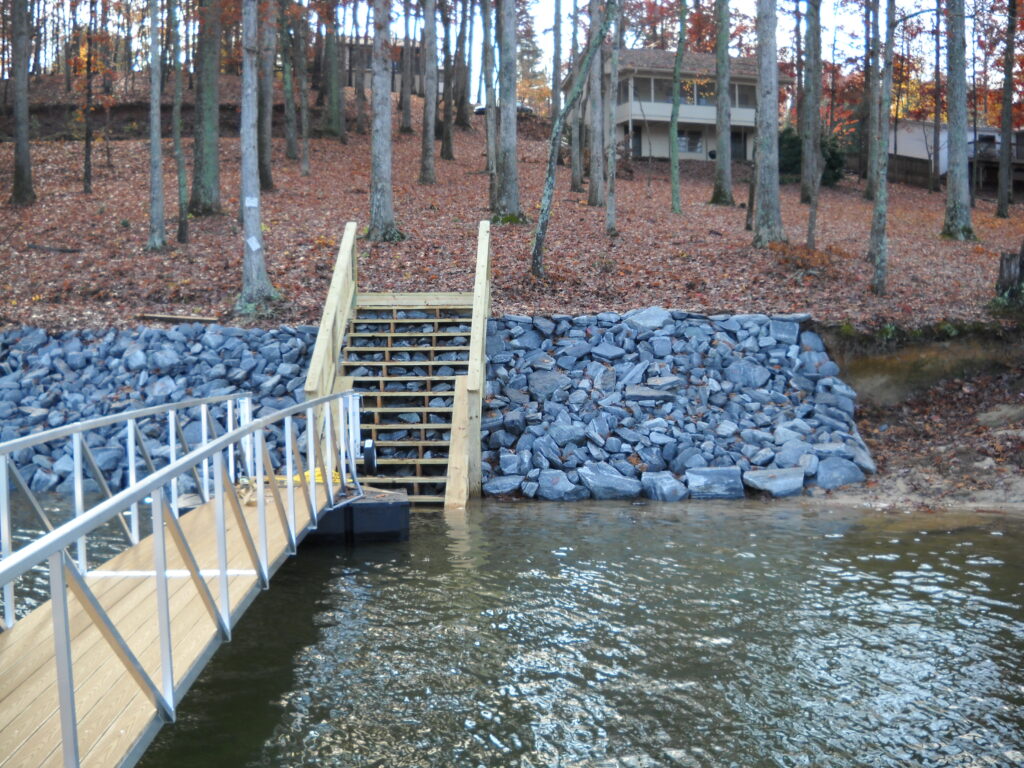
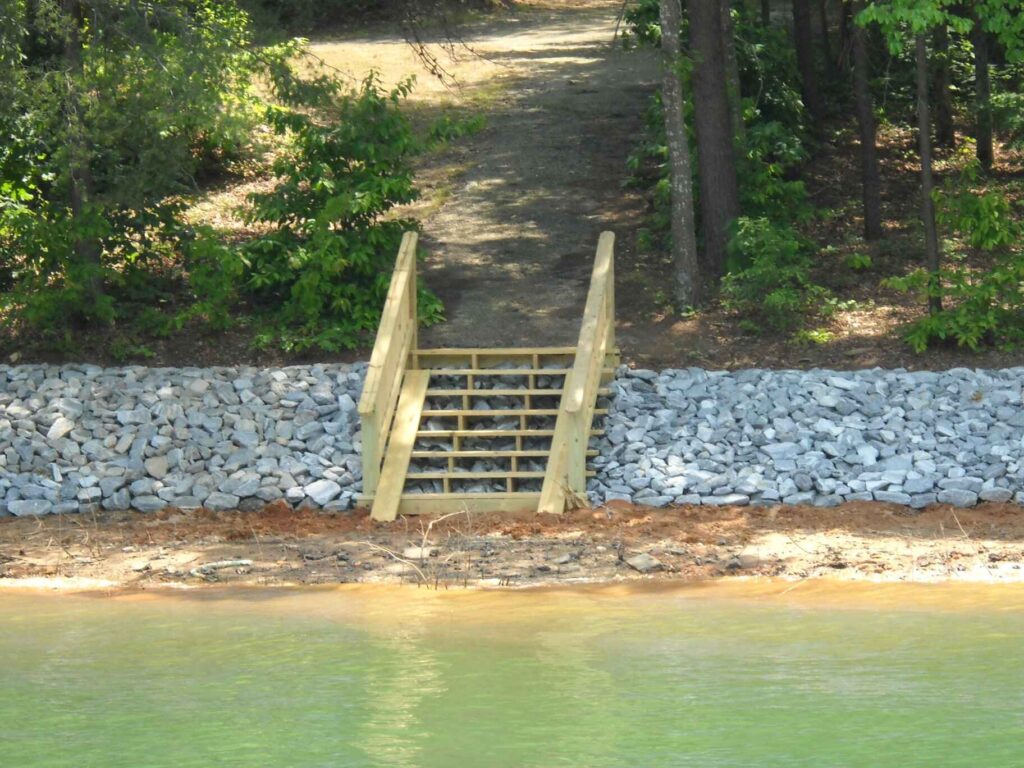
Rip rap consists of large stones placed along the shoreline to absorb wave energy and prevent erosion. Without protection, wave action and runoff gradually undermine the bank, threatening both your dock’s foundation and your property.
Professional installation ensures proper stone sizing and placement for your specific shoreline conditions. Rip rap is engineered protection, not decorative landscaping.
Steep or uneven terrain between your yard and dock creates access challenges and safety concerns. Custom-built shoreline steps provide stable footing on grades that would otherwise be difficult to navigate.
Shoreline steps are constructed with the same durability standards as the dock itself, designed to withstand lakefront conditions for years.
Homeowner builds focus on lifestyle and how you actually use your waterfront. Custom floor plans accommodate specific boat sizes, entertaining space, fishing access, or simply a quiet spot to watch the sunset.
Design options include multiple decking materials like composite, PVC, aluminum, or natural wood. Roof styles provide shade and weather protection. Accessories like sundecks and swim platforms round out the system.
Commercial applications require different engineering to handle higher traffic, larger vessels, and more demanding use patterns. Marina configurations, HOA community docks, and multi-slip systems all fall within this category.
Commercial projects often involve more complex permitting and coordination, which makes experienced project management particularly valuable.
Generational expertise translates to practical knowledge that newer companies simply haven’t accumulated. After 70 years and thousands of installations, patterns emerge. What materials last. What designs perform. What problems to anticipate before they occur.
Here’s what working with an established builder looks like:
The process begins with a dock consultant visiting your property to evaluate shoreline conditions, water depth, and how you plan to use the dock. This assessment informs what’s possible and what will work best for your specific situation. We can help with that—we’ll even handle your TVA permits for you.
Working with the design team, you select the layout, slip configuration, and overall dimensions. 3D models help visualize exactly how the finished dock will look on your waterfront before construction begins.
Decking, roofing, lifts, PWC ports, sundecks. Each element is chosen based on your preferences and how the dock will be used. Your consultant walks through options and explains the tradeoffs between materials and features.
The in-house team handles fabrication and installation. Once complete, post-installation support ensures everything functions as expected and any questions get answered promptly.
Get a free estimate to start your custom dock project.
Storm damage, normal wear, or simply wanting an upgrade. Repair and remodeling services address all of these situations. Options range from replacing damaged decking to reconfiguring layouts or adding new slips.
Dock Watch is a recurring service that monitors your dock’s position and condition throughout the year. As water levels change, the team adjusts and repositions the dock to prevent damage and maintain proper access.
This program is available on Lake Lanier and TVA lakes including Blue Ridge, Chatuge, and Nottely.
Regular maintenance extends a dock’s lifespan and keeps the system safe. Available services include:
Three generations of waterfront construction experience back every project we take on. From initial design through years of ongoing service, our team provides the expertise and support your dock investment deserves.
We serve from Gainesville, GA and Hiawassee, GA, covering North Georgia, Western North Carolina, and lakes throughout the Southeast.
Contact us today to schedule your consultation or request a free estimate.
Costs vary significantly based on size, materials, accessories, and site conditions. A 20-foot residential dock differs greatly from a 60-foot system with lifts and a roof. Professional builders provide custom quotes after assessing your specific property and project scope.
Most lakes require permits for dock construction, though requirements vary by jurisdiction and lake authority. Professional dock builders typically assist with permit applications as part of the project, handling the paperwork and agency coordination.
The four main types are floating docks, fixed docks, pipe docks, and crib docks. For residential lakefront properties in the Southeast, floating and fixed docks are most common. Floating systems are preferred on lakes with variable water levels.
Timelines depend on dock complexity, permit approval speed, and weather conditions. Simple installations may take a few weeks while larger custom projects with extensive permitting can take several months. Your builder provides an estimated schedule during the design phase.
Aluminum is the preferred frame material for floating docks due to its durability, corrosion resistance, and minimal maintenance requirements. Unlike wood or steel, aluminum won’t rot, rust, or attract pests.